
Interview with Dr. Jordan Martine and Monica Morrison
Spotlight Series Topic: Pelvic Floor PT
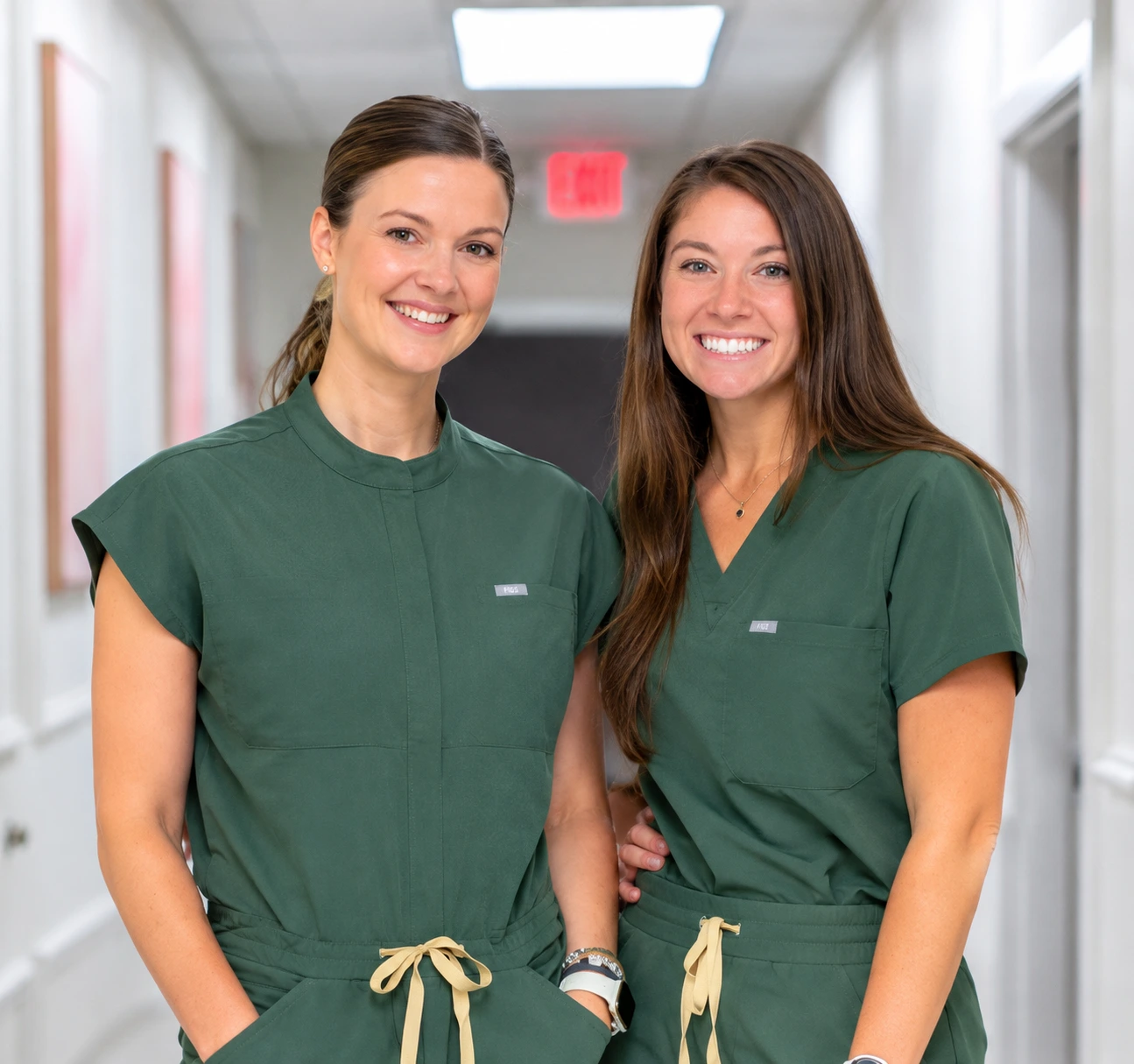
Guest Name: Dr. Jordan Martine, DPT, and Monica Morrison, OT
Discussion Details: We sat down with Dr. Jordan Martine, owner of Salt & Light Physical Therapy & Wellness, and Monica, an occupational therapist specializing in pelvic floor therapy, to discuss the importance of pelvic health for women of all ages, including teenage athletes.
The conversation focused on common misconceptions about pelvic floor therapy, how pelvic health connects to strength, athletic performance, recovery, and overall wellness, and why women may benefit from specialized care even if they haven’t experienced childbirth or menopause. We also explored Salt & Light’s holistic, individualized approach, their treatment options, and Monica’s free consultation opportunity.
We highlighted the value of connecting CTG’s female athletes and active women with specialized pelvic health providers as part of a more comprehensive approach to care.
Benefit of Watching: Viewers will gain a better understanding of what pelvic floor therapy is, who can benefit from it, and why pelvic health matters throughout different stages of life — including adolescence and athletic participation.
This spotlight helps female athletes, parents, and active women recognize when pelvic health support may be beneficial, understand how it relates to strength, movement, performance, and quality of life, and learn what to expect from specialized pelvic health care.
Viewers will also discover Salt & Light as a local resource for holistic pelvic health services and learn about the opportunity to schedule a free consultation with Monica to explore their options.
Address of Guest’s Business: Salt & Light Physical Therapy and Wellness
5917 Oleander Dr Ste 106, Wilmington, NC 28403
Hi everybody, it’s Coach Al from Change the Game, and I’m here at Salt and Light Physical Therapy with Dr. Jordan Martine. Jordan, can you introduce yourself and tell us a little bit about what you do here?
My name is Dr. Jordan Martine, and I’m the owner of Salt and Light Physical Therapy and Wellness here in Wilmington, North Carolina. We specialize in providing holistic women’s healthcare treatment for women throughout the lifespan. We specialize in pelvic floor rehabilitation, orthopedics, and oncology care. Pelvic floor care includes prenatal and postpartum care, as well as perimenopause and menopause care.
What led you to specialize in pelvic health and women’s health physical therapy?
I blame that one on my mother. She is a midwife and now a nurse practitioner, so I was raised in a household where there were babies, pelvises, and birthing classes going on. I’m very comfortable with it, and I feel that women’s health has been passed down generationally in my family. At this point in my career, I’m excited to hold space for healing for women in the Wilmington community.
When people hear “pelvic health PT” or “pelvic floor PT,” they may assume it’s only for women after pregnancy or later in life. Who can actually benefit from this type of care?
Everybody with a pelvis. Literally everyone can benefit from pelvic floor rehabilitation. Yes, that includes prenatal and postpartum care, but we work with women throughout the lifespan. We typically start treatment around 18 years old with women who may be experiencing endometriosis, painful intercourse, or PCOS (polycystic ovary syndrome), chronic conditions that often start earlier in womanhood. Then we continue through the childbearing years and into perimenopause and menopause. At some point, most women will run into an issue with bowel, bladder, or sexual dysfunction, and that is our wheelhouse.
At Change the Game, we work with female athletes from adolescence all the way through adulthood. What are some reasons a female athlete or active woman may benefit from pelvic health physical therapy?
Top of mind would be stress urinary incontinence, where a woman might leak urine while running, jumping, or doing heavy powerlifting. Another sign is feeling like the bottom is falling out vaginally, which can indicate pelvic organ prolapse. For example, on heavy lifting days, she may start to feel pelvic pressure, like she’s sitting on a golf ball when she sits down.
Someone with low back pain, SI joint dysfunction, or hip pain could also benefit. A lot of times we think an orthopedic PT can handle that. But if you’ve seen an orthopedic PT and the issue keeps recurring and we can’t fully get rid of it with orthopedic care alone, that’s also a sign for a pelvic floor provider to get involved. You may need an internal pelvic assessment to address musculoskeletal issues that an orthopedic physical therapist isn’t necessarily trained to address.
What do you wish more women understood about how pelvic health connects to strength, performance, recovery, confidence, and overall quality of life?
I wish women knew that this is normal. I want to normalize it. It’s normal to run into some issues, because our anatomy and the way we’re designed set us up to have issues over the lifespan. First of all, I want to normalize that bowel, bladder, and sexual dysfunction can happen at some point in your life. You’re not broken. Your body hasn’t failed you. You’re a woman, and you just need the proper support, and we’re here to help you through that.
I want to encourage women to seek help rather than feel ashamed of what’s happening with their body or feel like they can’t talk to anyone and suffer in silence. On average, it takes about seven years for women to seek help for pelvic floor therapy. If you can get help sooner, you’ll get better faster. Often those issues resolve more quickly, but the longer they go on, the harder they become to treat and the more they affect a woman’s life. There’s no need to be ashamed of anything related to the pelvis. We all have pelvises, and we all will need some help at some point.
For somebody who has never been to a pelvic health PT before, what does the first visit usually look like?
That’s a great question. Here at Salt and Light, it looks a little different. We are an out-of-network provider, so we get to take a holistic approach to care. We also get to spend one hour with every patient, so it’s a 60-minute, one-on-one appointment with your provider. We do a thorough head-to-toe assessment. We start with an orthopedic screen, where we look at the lumbar spine, hip range of motion, pelvic alignment, and hip strength and flexibility. We pair that with an internal pelvic assessment, where we screen the three layers of the pelvic floor muscles, looking at strength, coordination, tone, and tension. Sometimes people think they’re too weak, but really they’re too tight. All of that happens at the initial visit. Then we work with each woman to develop a care plan that’s unique to her body and her goals.
At that first visit, we complete the initial evaluation, collect all the data, and ask what your main goals are. Depending on what’s going on, we recommend an appointment frequency and estimate a length of time. On average, our patients are seen for 10 to 12 visits, but it depends on the individual. If it’s a chronic condition like endometriosis or chronic pelvic pain, they might be seen for a longer period. It’s hard to know exactly what you’ll need at the very first visit because every woman responds a little differently. We don’t take a cookie-cutter approach to care, but we give our best clinical recommendation based on the evaluation, and then we unpack the treatment from there.
Our treatment consists of a multimodal approach. We do internal pelvic floor therapy, where we work either in the vaginal canal or the colorectal canal, using different techniques on the soft tissue and muscles. We’re trained in pelvic health certifications to provide that level of care. Manual therapy can be done internally, but also externally. I specialize in dry needling, including trigger point dry needling and integrative dry needling. We also do soft tissue massage, which may use our hands or instruments such as a Gua Sha tool, as well as cupping. That’s our manual therapy realm.
We also do neuromuscular reeducation, which can include breathwork, such as retraining the diaphragm for proper diaphragmatic breathing, and exercises to help the pelvic floor muscles either contract or relax. In addition, we do functional strengthening and functional training. It depends on what’s going on, but at some point most people will receive some manual therapy and some movement-based treatment as well.
Is there something special you’d like us to know about Salt and Light right now?
Yes, I’d like to introduce Monica Morrison, our newest women’s health occupational therapist. She’s been with us since June; she’s accepting patients, and we’re working on building her caseload. Monica, will you tell us a little about yourself?
Yes, I’m an occupational therapist specializing in pelvic health. I was drawn to women’s health therapy because pelvic health is related to so many of our day-to-day occupations, and this is often overlooked or not discussed. As a pelvic floor therapist, I love being able to help women feel empowered, confident, and comfortable in their own bodies.
Excellent. Ladies, if somebody is watching this and thinks, “This sounds like something I may need,” what’s the next best step to learn more or to schedule with either of you?
We have a couple of options. They’re welcome to call. We have two patient care coordinators who are always up front, so they can call the clinic or send an email to our admin email address, which we could link in this video. Monica, do you want to tell them about our free screens?
Monica: Yes. I offer free 30-minute screens for anyone wanting to see if pelvic floor therapy is right for them and to learn more about what we do here at Salt and Light and how we can help.
That 30-minute free pelvic floor screen allows you to meet one-on-one with the provider and see the space. It makes pelvic floor therapy a little less scary.
Well, thank you, ladies, so much.
Thank you!